article · Kitchen & bath
Choose bathroom stone by the surfaces people touch and clean
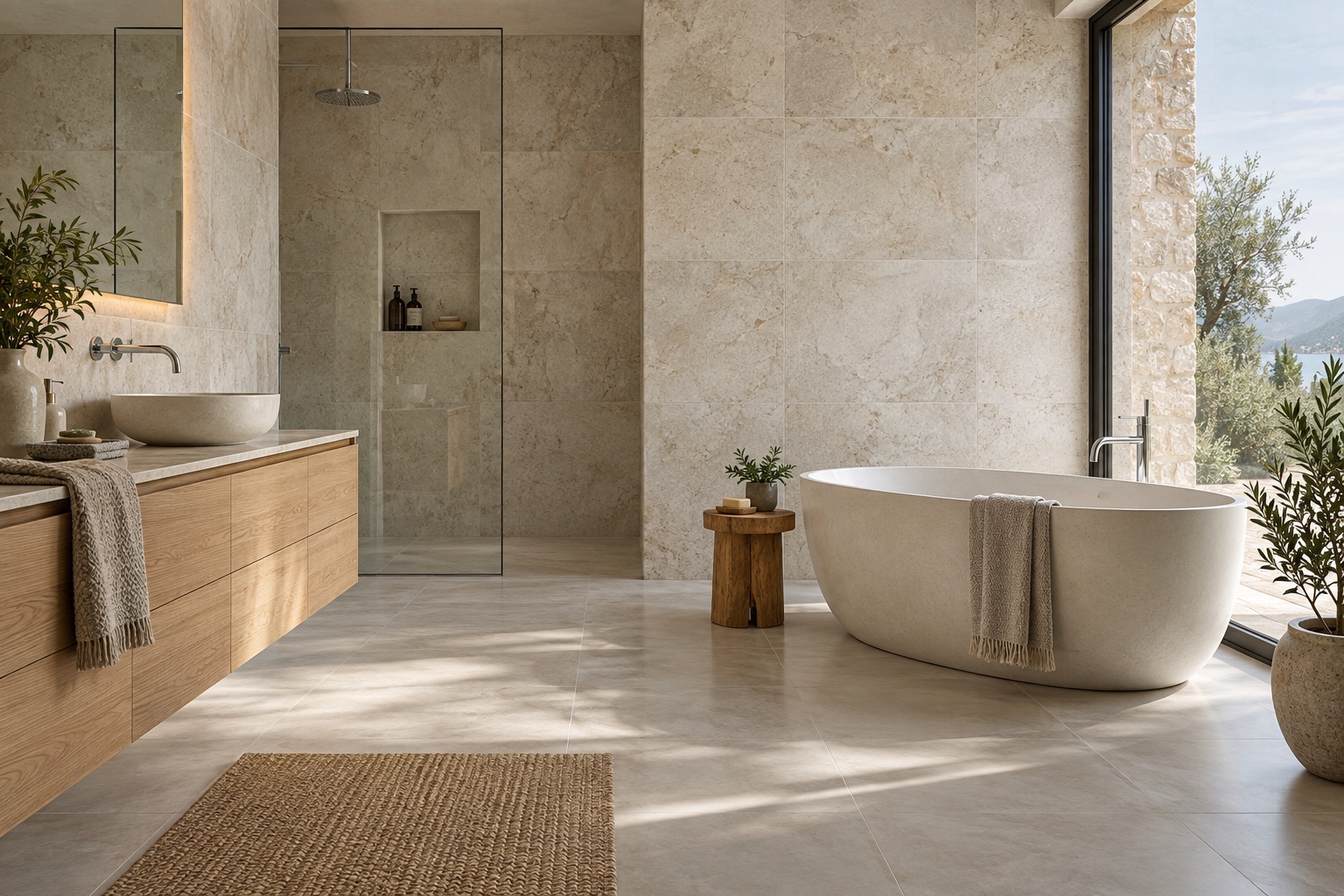
A bathroom photograph makes the vanity, floor and shower appear to be one coordinated finish decision. In use, each surface meets different demands. Begin with a small room plan identifying the dry grooming area, places where water is regularly left and the surfaces that people touch while moving around. Add who uses the room and what is normally stored on the vanity. This lets the owner compare a decorative wall feature with a working vanity without treating the fact that both are stone as evidence that they need the same finish.
Give each bathroom surface its own brief
A bathroom photograph makes the vanity, floor and shower appear to be one coordinated finish decision. In use, each surface meets different demands. Begin with a small room plan identifying the dry grooming area, places where water is regularly left and the surfaces that people touch while moving around. Add who uses the room and what is normally stored on the vanity. This lets the owner compare a decorative wall feature with a working vanity without treating the fact that both are stone as evidence that they need the same finish.
Describe the grooming routine before selecting the top. A shared vanity with cosmetics, hair products and several users should be discussed differently from a lightly used guest room. Ask how objects will be stored, where wet bottles will rest and whether the household expects to clear the top after use. These are practical questions about the owner's priorities, not a ranking of stone families. If the chosen design depends on a routinely bare surface, make that expectation visible before an attractive rendering creates agreement that the household's actual habits cannot sustain.
Connect samples with the installed room
View a proposed stone beside the actual cabinet finish and the planned lighting rather than approving it from an isolated showroom sample. Include the basin and faucet finish in the comparison because these are the items the owner will see immediately beside the material. Ask the supplier what the sample represents: a general color family, a particular slab or the intended finished surface. When the bathroom design uses a dramatic pattern, review where that pattern would sit around the basin and whether the intended arrangement has been checked by the fabricator.
Keep color approval distinct from wet-area design. TCNA's shower guidance directs membrane and backing compatibility to the relevant manufacturers and design professional. It does not make an attractive stone selection a waterproofing specification. Where the bathroom includes a tiled shower, ask the installer to identify that assembly separately from the vanity choice. Record whether the wall selection is only visual at this stage or is already approved for the intended system. This prevents a coordinated palette from becoming a reason to overlook an unresolved technical decision.
Make a realistic room maintenance agreement
Review the care instructions against the household's existing supplies. Ask which products should remain elsewhere and how the person cleaning the room can identify the approved routine without searching through a renovation folder. Do not accept a general statement that stone can be maintained with whatever is already under the sink. The Natural Stone Institute's cleaning resource is a starting point for material-aware questions; the selected stone, finish and any treatment still need specific instructions from the people supplying them. Keep the written answer with the purchase record.
The EPA's moisture guidance identifies control of the water source as essential when mold is a problem. A bathroom finish purchase therefore should not be presented as a cure for an existing ventilation or leakage issue. Ask the project team how known moisture concerns will be assessed and who will explain the room's operation at handoff. Approve the stone when its appearance, care responsibilities and intended location are clear. Keep unresolved ventilation, plumbing or wet-area construction work on its own action list instead of allowing the finish order to imply that those questions are settled.
Sources
- Care and cleaning of natural stone Natural Stone Institute
- Showers: membrane and backing compatibility Tile Council of North America
- A brief guide to mold, moisture and your home United States Environmental Protection Agency